
Tooling Engineering · Cold Heading
Engineering Beyond Standard: Multi-Station Tooling for Complex Fastener Geometries
When a part outgrows what a simple two-blow header can form, the answer is not a bigger machine. It is a better-planned sequence of stations, and the tooling that holds that sequence together.
Automotive and precision fasteners keep getting more demanding: stepped pins, flanged shapes, internal drives and features that sit well outside a plain head-and-shank profile. Every added feature has to be formed somewhere in the process, and the number of stations, how they are arranged, and how each die is built decide whether the part comes out consistently or the tooling fails early.
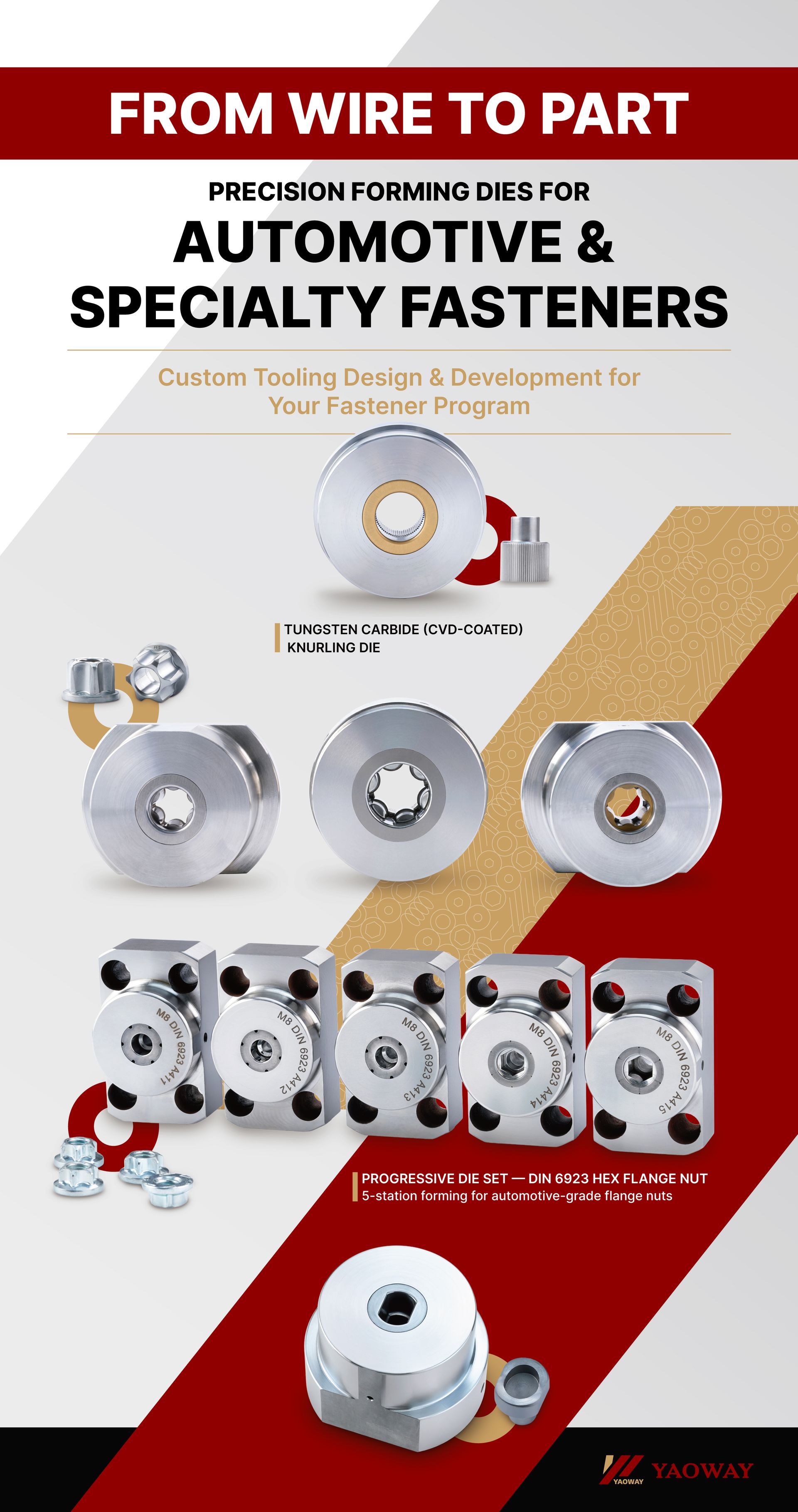
At YAOWAY we build progressive forming tooling across several complexity levels, from 4-station sets to 6-station main forming dies. This article walks through three examples from our 2026 expo lineup and the engineering thinking behind each.
Why station count matters
In cold heading, the wire slug is displaced, not cut away. A common rule of thumb is that the unsupported length of a slug that can be upset in a single blow is about 2.3 times its diameter. Parts with large head-to-shank volume ratios, or with features at both ends, exceed that limit quickly and need to be formed progressively.
Adding stations spreads the deformation across several smaller steps. Each blow does less work, material flow is easier to control, and stress on punches and dies drops. The trade-off is tooling complexity: more stations mean tighter alignment requirements, more components to hold in tolerance, and a bigger penalty if any one of them is poorly designed.
| Tooling example | Typical role | Engineering focus |
|---|---|---|
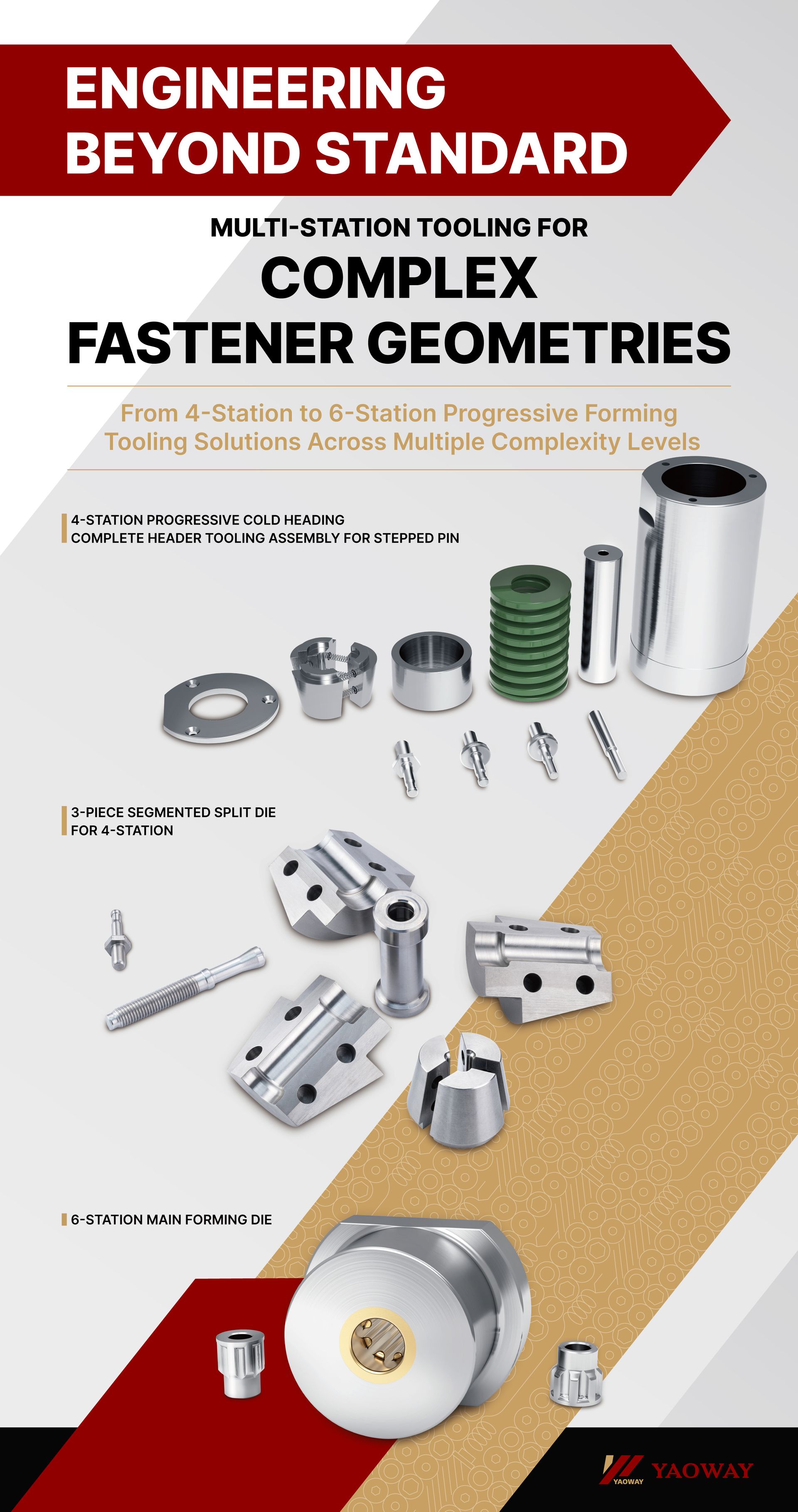
| 4-station progressive cold heading, complete header tooling assembly (stepped pin) | Complete set from die case to punches | Station-to-station transfer accuracy; coordinated punch sequence for stepped geometry |
| 3-piece segmented split die for 4-station | Forming features a one-piece die cannot release | Segment fit and clamping; parting-line control |
| 6-station main forming die | Highest-complexity progressive forming | Rigidity, concentricity and insert layout across six stations |
1. 4-station progressive cold heading: a complete tooling assembly
A stepped pin looks simple, but each diameter change is a forming event. In our complete 4-station header assembly, the tooling is engineered as a system rather than as separate parts: die case, die insert and sleeve, pressure plate, return spring, ejector pin and a matched set of punches, one per station.
Punch sequence
The four punches progress from a first-blow preform to the finished stepped profile. Early stations move bulk material and set the volume distribution; later stations define the final steps and radii. Because each punch shape depends on what the previous one left behind, they are designed and checked as a sequence.
Why buying it as a set helps
Fit between the die case, inserts and punches determines alignment at every blow. Supplying the full assembly lets us hold those relationships to a single standard, which shortens setup and makes it easier to reproduce a known-good configuration on the next production run.
2. 3-piece segmented split die for 4-station forming
Some geometries cannot be released from a solid, one-piece die cavity. Undercuts, features that widen after the die opening, and shapes that would otherwise lock the part in place call for a die that opens.
A segmented split die is built from separate sections that close around the part during forming and separate to release it. Our 3-piece design splits the cavity into three segments held together by the housing and a spring-loaded clamping arrangement, so the cavity closes reliably each cycle and opens cleanly at ejection.
- Complex form capability: features that would be impossible with a solid die become practical.
- Serviceability: a worn or damaged segment can be reworked or replaced without discarding the entire die.
- Critical detail: the parting lines. Segment mating faces must be ground to tight fit so that material does not flash into the joints under forming pressure.
Engineering note: the more pieces in a die, the more tolerance stack-up you manage. That is why segment fit and housing rigidity get as much attention as the cavity shape itself.
3. 6-station main forming die: the high end of progressive forming
For parts that need the greatest number of forming steps, a 6-station main forming die puts six working positions in one rigid body. The challenge shifts from forming any single feature to keeping six stations aligned to the same axis and the same tolerance band.
- Rigidity: the main die body has to resist deflection across all stations at once under repeated impact.
- Concentricity: insert bores across stations are held to a common reference so the part transfers cleanly from one blow to the next.
- Insert strategy: high-wear forming zones use dedicated inserts, so the body stays in service while inserts are changed as they wear.
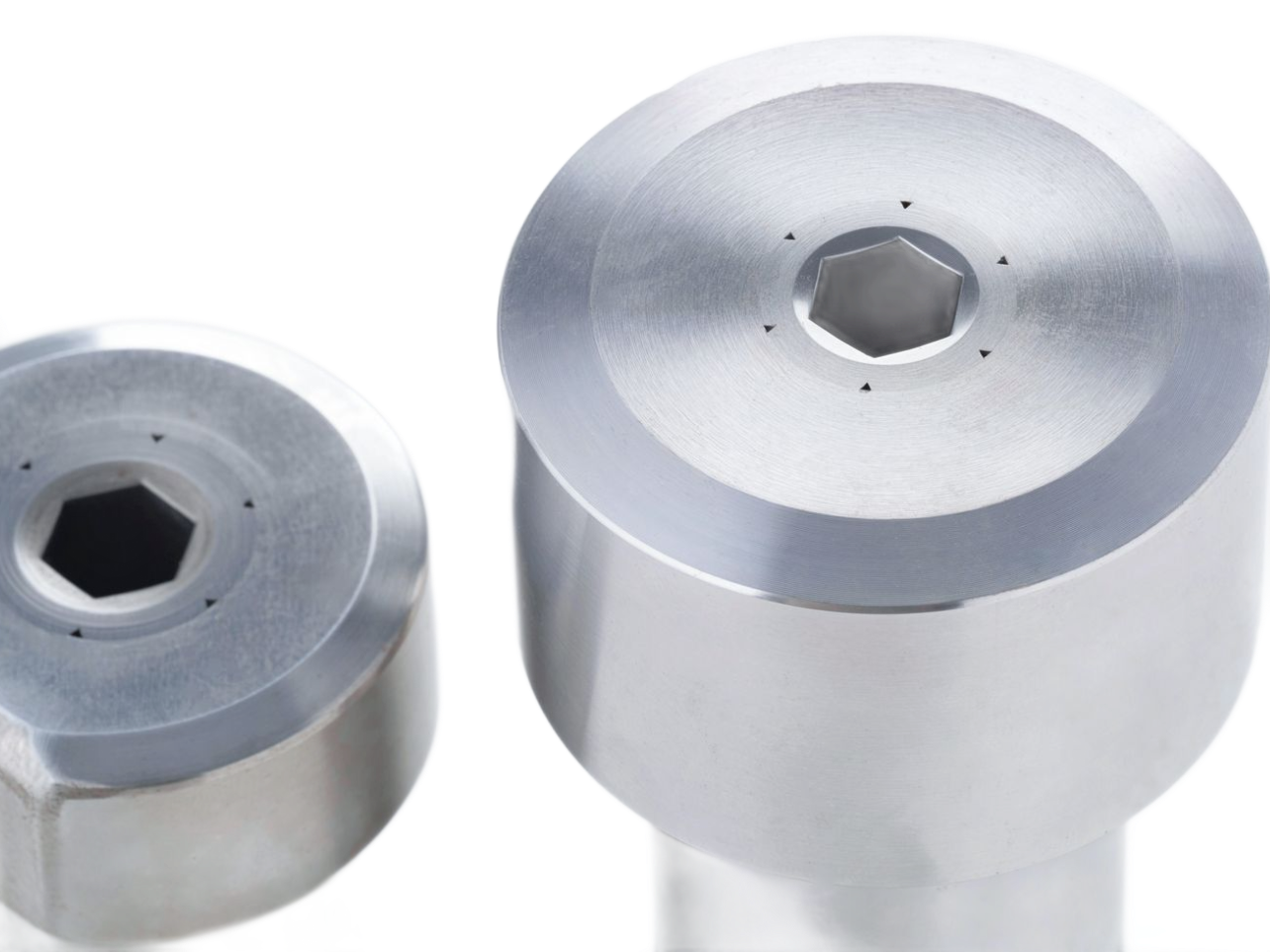
- Complex drive geometries: multi-lobe and internal drive features, such as those on the shaped inserts supplied alongside the main die, are formed in the later stations.
Choosing the right level of complexity
More stations is not automatically better. If a part can be formed reliably in four stations, adding two more raises tooling cost and setup effort with no benefit. The right question is: what is the minimum number of stations that keeps each blow within safe material flow limits and holds the part's tolerances?
That is the conversation we want to have with fastener manufacturers. Share the part drawing and annual volume, and we can recommend a station layout, die construction and material approach to match.
From die design to a machine that is ready to run
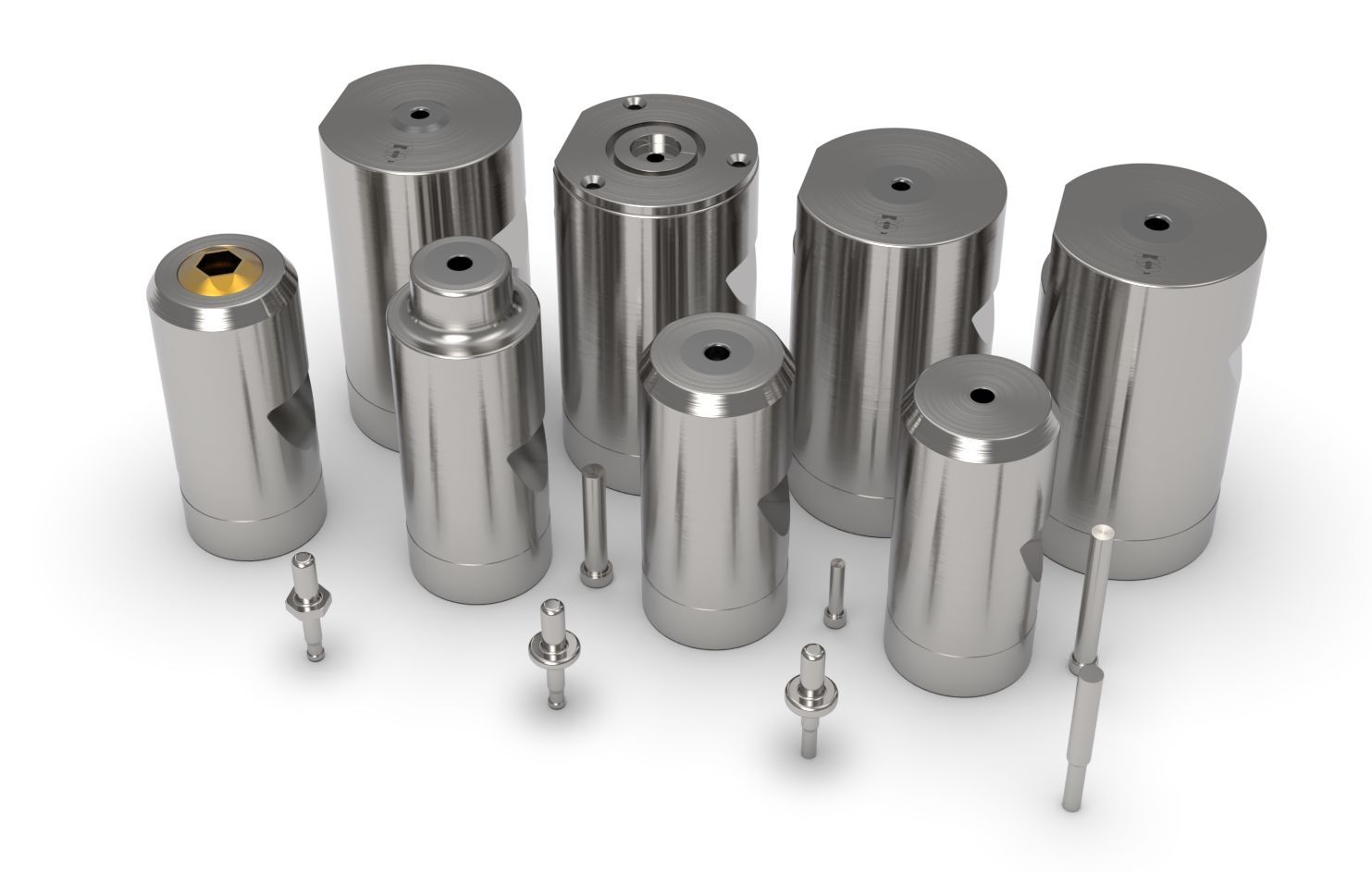
Complete multi-station die set, designed and built in-house.
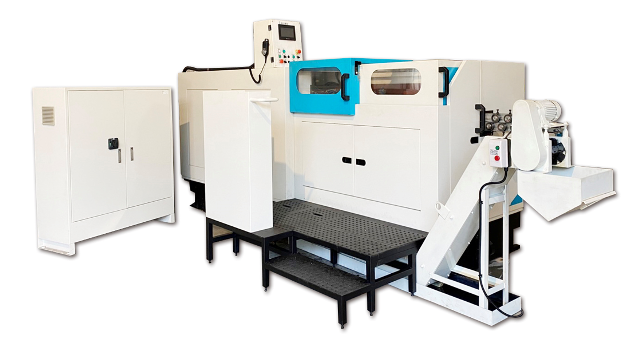
Tooling fitted and the process proven on the machine before shipment.
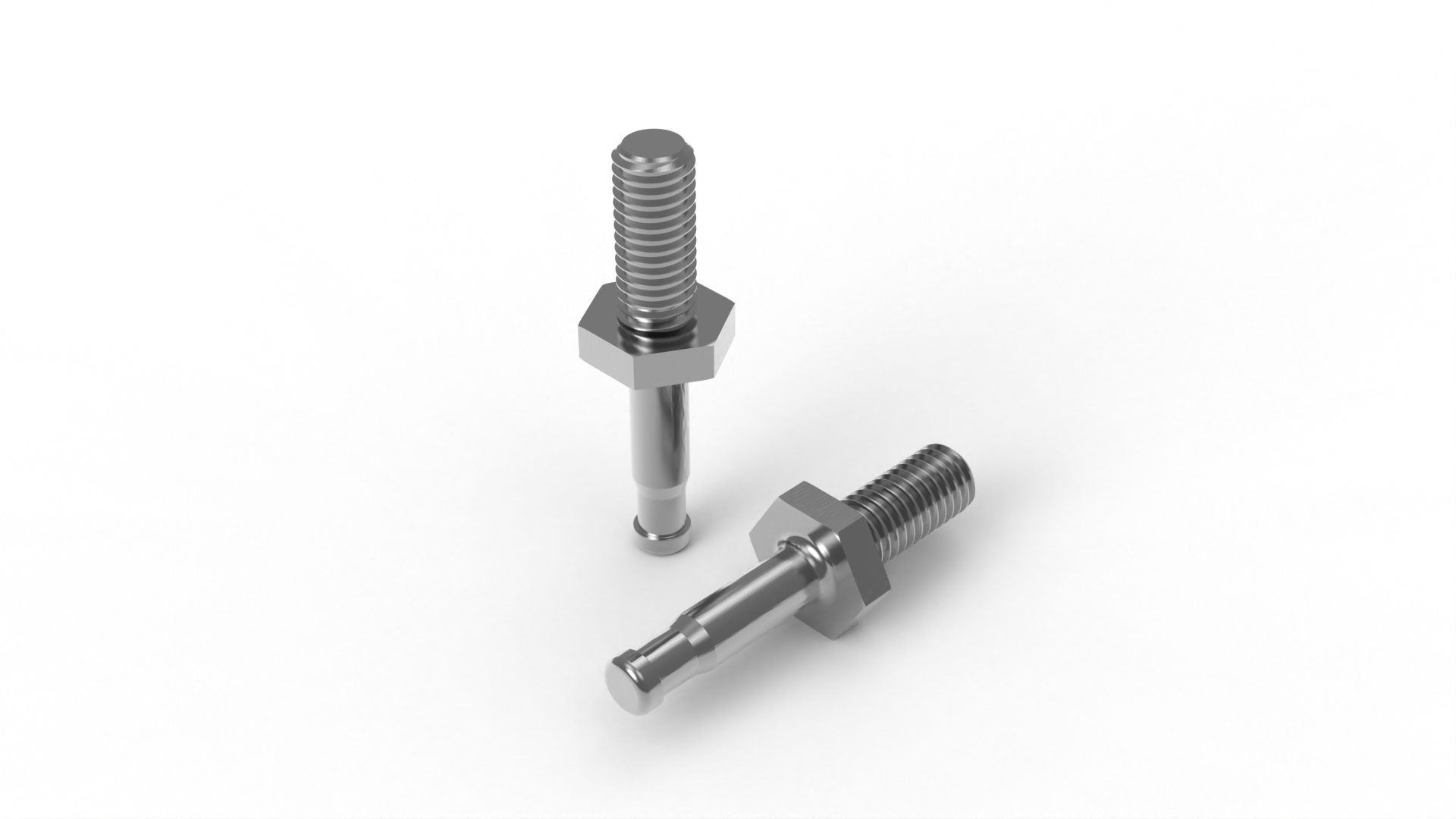
Machine and matched tooling arrive ready to start production.
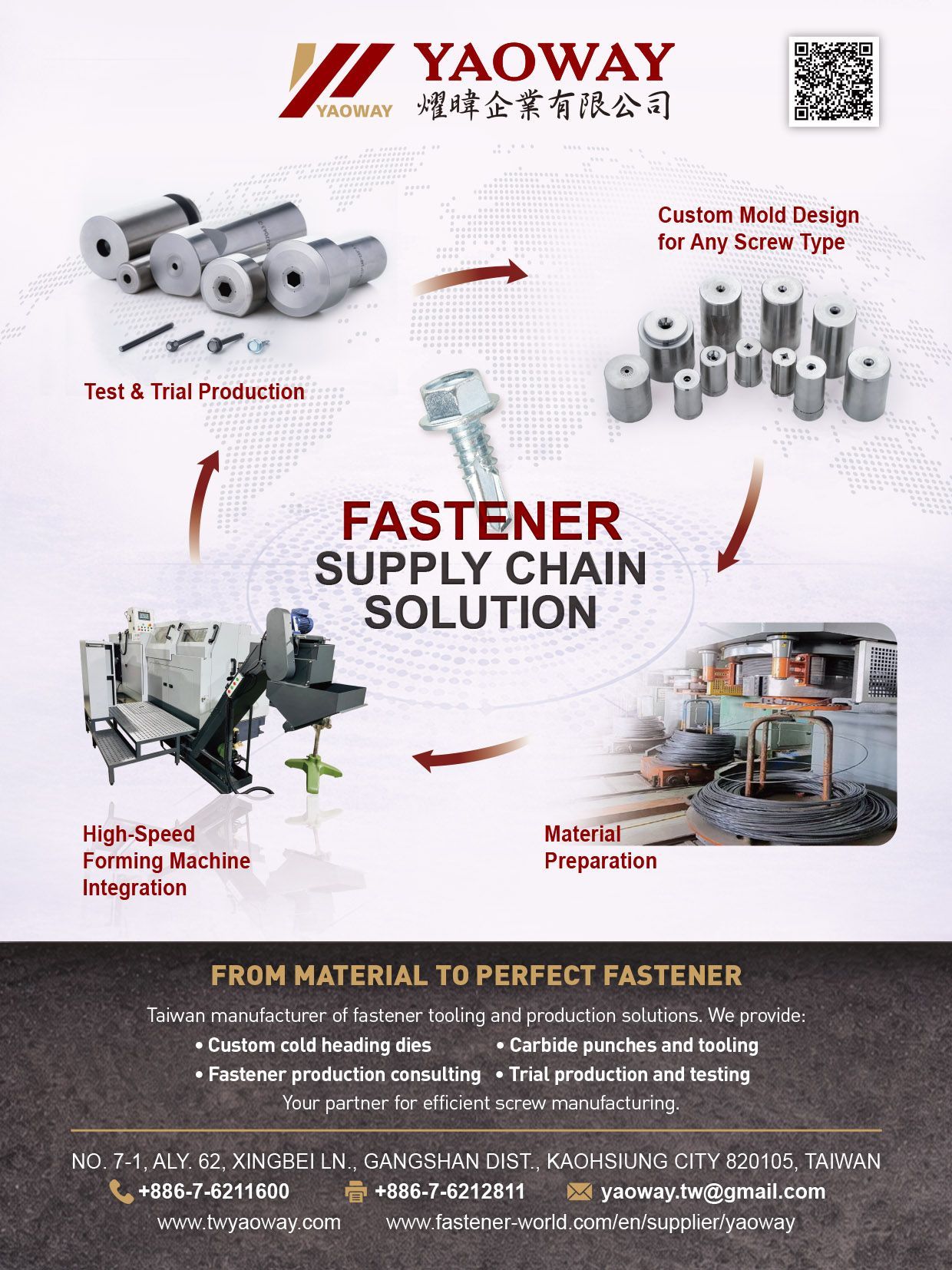
Tooling only earns its keep once it is running parts on a machine. A common problem for fastener manufacturers is that the dies come from one supplier, the machine from another, and the tryout happens on the customer's own floor, where every adjustment costs production time.
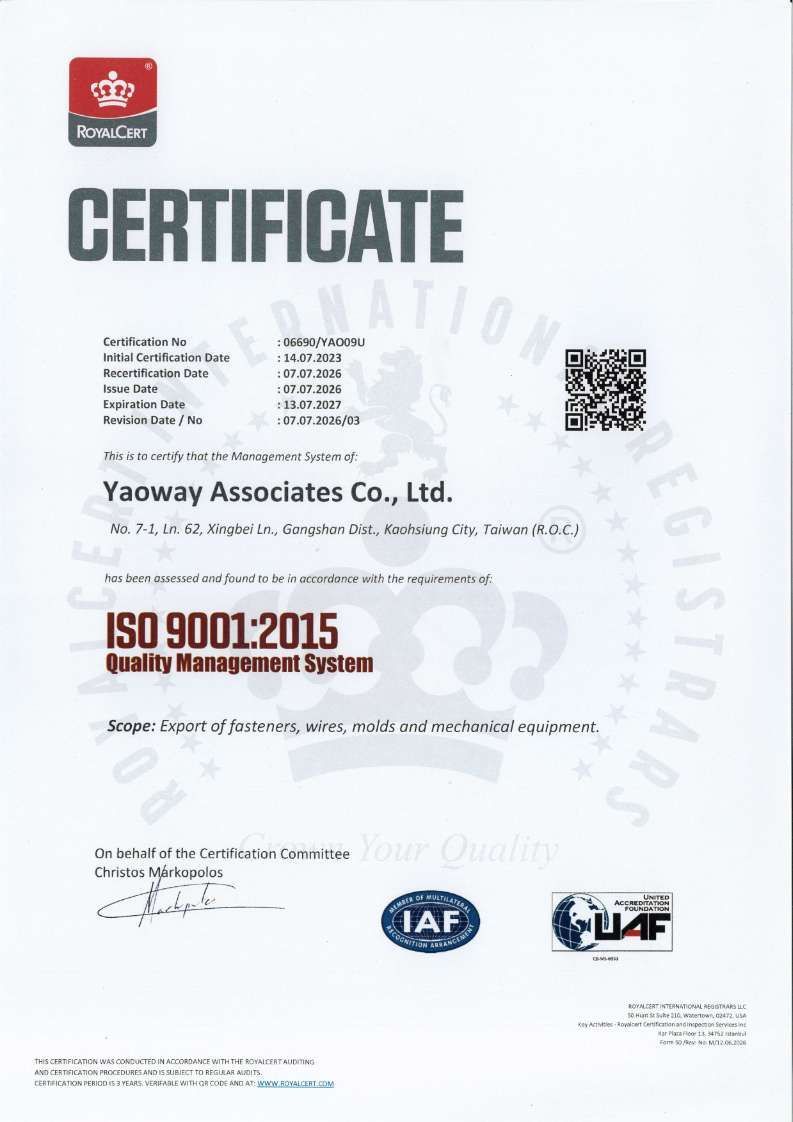
YAOWAY handles the whole chain in one place: die design, die manufacturing, and tryout on the bolt former. When you purchase one of our high-speed bolt former machines together with your tooling, we run the tryout on the machine before it ships. The tooling is fitted, the process is tested, and the setup is proven.
- Design and manufacture under one roof: the same engineering team that plans your station layout builds the dies, so design intent is not lost between suppliers.
- Tryout before shipment: forming issues are found and corrected at our facility, not on your production floor.
- Ready to run on arrival: the machine reaches you with matched tooling and a verified setup, so you can move to production directly instead of starting a long commissioning period.
Why it matters: for multi-station tooling in particular, where six stations must work together, a supplier who has actually run the tooling on the machine removes a large source of start-up risk.
Meet us at the 2026 International Fastener Expo
Bring your toughest part drawing. We will have our multi-station tooling, sample finished parts and our engineering team on the show floor to talk through your tooling and how we can deliver it ready to run.
Reserve a Meeting or Request a Quote